This post contains affiliate links. We may earn a small commission when you purchase through our links, at no extra cost to you. We only share items that align with our vision of a calm and intentional home.
Most entryways do not fail because of bad design. They fail because there is no system. Coats land on chairs, shoes gather by the door, and keys drift from one surface to the next. A calmer entryway creates a clear transition between arriving home and moving into the rest of the day.
Start with visibility: clear surfaces create calm
The entryway is not just a pass through space. It is the first place where the home either feels settled or starts to feel cluttered. When shoes, bags, keys, and small objects all land wherever there is room, the area quickly loses its sense of order.
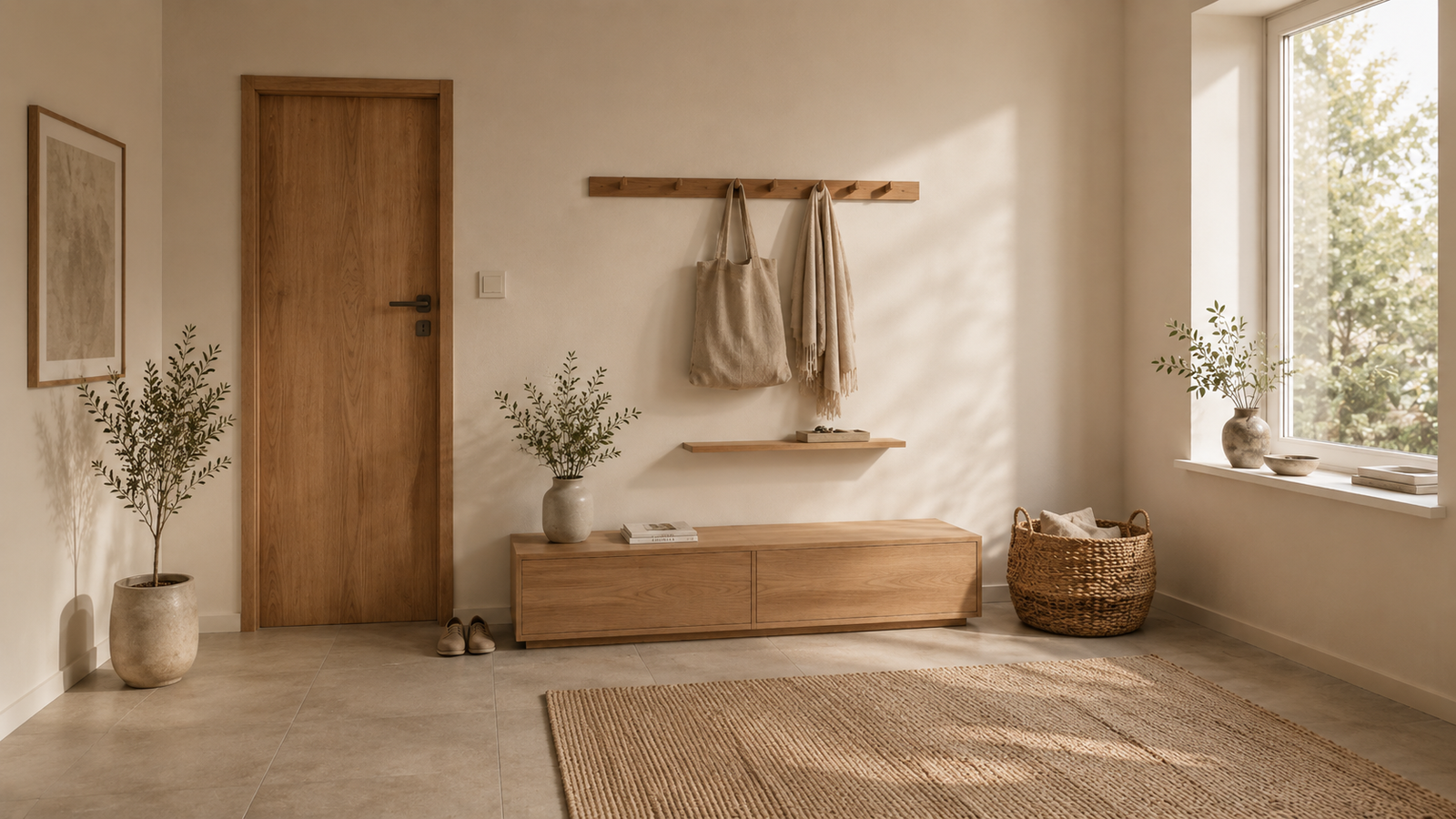
A more intentional entryway gives each daily essential a natural place. Shoes stay hidden. Outerwear stays off the floor. Smaller items remain contained instead of spreading across nearby surfaces. That kind of clarity changes how the space feels before anything else has to change.
Once the entryway becomes easier to read, it also becomes easier to maintain. There is less to move, less to search for, and less visual noise waiting at the door.
Build in a system for leaving: the outgoing basket
Most entryway systems focus on arrival. Shoes go away. Coats get hung. Bags are put down. But departure creates just as much friction. Returns, library books, borrowed items, gym gear, and anything else that needs to leave the house often end up scattered across different rooms.
One basket near the door gives those items a temporary home. It keeps them visible without letting them become clutter. Instead of collecting loose piles around the house, everything that needs to go waits in one quiet, contained place.
The result is not a perfectly managed morning. It is a smoother one. Fewer last minute searches. Fewer forgotten items. Fewer small points of chaos before the day begins.
Use the wall: vertical space reduces floor clutter
Floor clutter changes the feeling of an entryway immediately. Shoes gather near the door. Bags settle on the ground. Coats find their way onto furniture because there is no better place for them. The room starts to feel smaller than it is.
A wall mounted shelf with hooks lifts that daily layer off the floor and gives the entryway structure without heaviness. It creates a place for coats, bags, and a few intentional objects, while keeping the lower half of the room visually quiet. A simple mirror supports that same sense of openness by reflecting light and making the space feel more complete.
When the vertical space works well, the whole entryway becomes easier to live with. It feels calmer because every part has a clear role.
The Edit
1. The Detail: Sculptural Catch All Bowl
Small daily objects need a place to land. Keys, earbuds, and loose items create clutter quickly when they move from one surface to another. A sculptural catch all bowl keeps them gathered in one place while adding a softer, more considered detail to the entryway.
- Why we love it: A sculptural catch all bowl adds warmth and function while keeping small essentials gently contained.
- [View on Amazon]
2. The Drop Zone: Minimalist Wall Shelf with Hidden Hooks
A wall shelf with hidden hooks brings structure to the entryway without making it feel overfilled. Coats and bags stay lifted from the floor, while the upper surface creates just enough room for a few purposeful objects. It adds function, but it also helps the wall feel finished and intentional.
- Why we love it: This piece combines hanging storage and a clean display surface in one calm, space saving design.
- [View on Amazon]
3. The Reflection: Entryway Mirror
A mirror makes the entryway feel lighter, more open, and more complete. It adds everyday usefulness before leaving the house, while also bringing balance to a space that can otherwise feel purely practical.
- Why we love it: A minimal mirror adds light, balance, and everyday function without introducing visual clutter.
- [View on Amazon]
4. The Base: Slim Shoe Cabinet
Shoes on the floor are one of the fastest ways to make an entryway feel untidy. A slim shoe cabinet keeps everyday pairs out of sight while preserving a clean, uncluttered line along the wall. It gives the space a more settled foundation from the moment you walk in.
- Why we love it: A slim shoe cabinet hides everyday footwear while keeping the entryway visually light and ordered.
- [View on Amazon]
5. The Soft Boundary: Neutral Entryway Rug
An entryway rug does more than protect the floor. It subtly defines the zone and makes the transition into the home feel more intentional. In practical terms, it also catches dirt, softens footsteps, and gives the space a more finished look.
- Why we love it: A neutral rug adds softness, structure, and everyday practicality to the first few steps inside the home.
- [View on Amazon]
6. The System: Woven Outgoing Basket
The outgoing basket is one of the simplest entryway systems, and one of the most useful. Returns, library books, borrowed items, and anything else that needs to leave the house all wait in one visible place instead of drifting through different rooms.
A basket keeps the function clear while adding warmth to the space. It is a small change that removes a surprising amount of daily friction.
- Why we love it: A woven basket near the door gives outgoing items one calm, visible place to wait.
- [View on Amazon]
The Final Thought
A calmer entryway begins with fewer decisions. When everything has a place to land, wait, or be found, the rest of the home feels easier to maintain.
Read next
The Evening Reset: 6 Essentials for a Calmer Morning
The Frictionless Start: 6 Essentials for a Morning That Runs Itself